
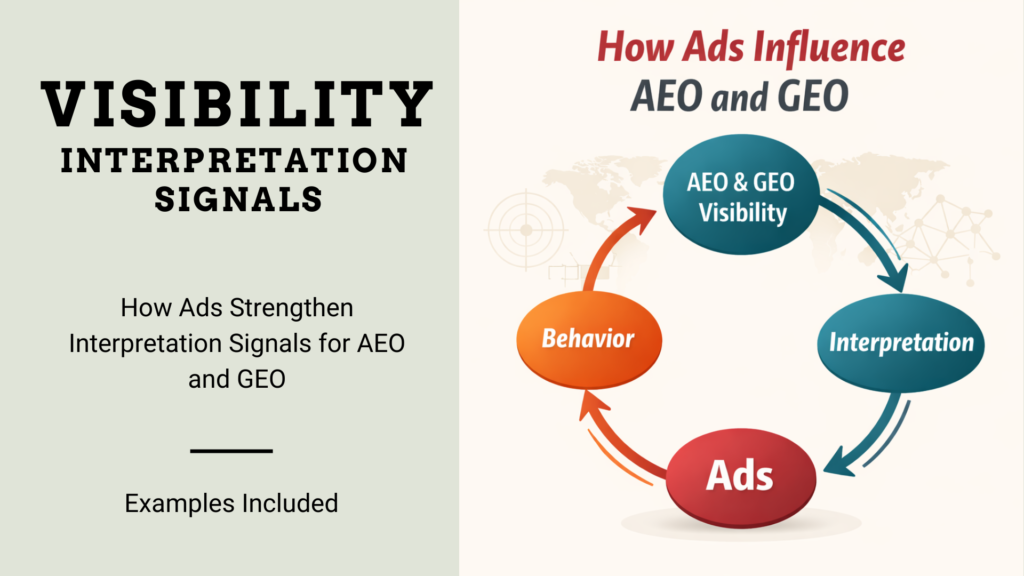
Search systems are moving from ranking pages to interpreting meaning. Visibility is shaped less by technical signals and more by how clearly a brand is understood. This shift is why AEO and GEO have become central to search visibility. They operate on interpretation, clarity and behavioural signals rather than keyword matching or traditional SEO inputs.
Many teams still see ads as a separate channel used for leads or awareness. In reality, ads influence something far more important. Paid marketing accelerate interpretation. They help systems understand who you are, what you offer and which audience you belong to.
Understanding AEO and GEO as Interpretation Systems
AEO and GEO do not reward keyword density or ranking tricks. They operate on signals that help systems interpret:
- What the brand represents
- Which category it belongs to
- What problem it solves
- Who it solves it for
- How users respond to it
- How consistent the brand’s meaning appears across surfaces
These interpretation signals form the foundation for AI visibility. Systems map entities, intent and relevance long before they decide what to show or recommend. Paid marketing influence this layer directly and much faster than organic activity.
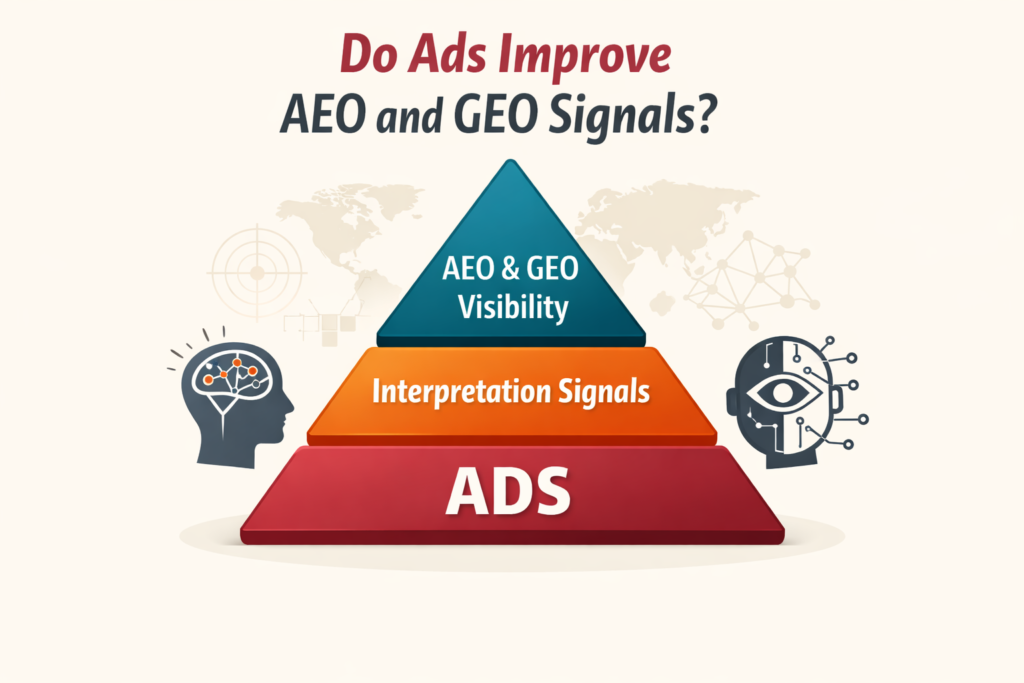
Paid Marketing as Interpretation Accelerators
Ads do not improve SEO. They do not increase rankings. What they do is accelerate interpretation. When people interact with an ad, systems receive immediate information about behaviour, intent, clarity and meaning. This creates clean interpretation signals that shape how the brand is categorised and understood.
The impact is indirect but powerful. Systems observe behavioural patterns in response to ad creative, messaging and landing pages. These patterns help reduce ambiguity about the brand and its relevance.
How Paid Marketing Strengthen Interpretation Signals
Interpretation signals are shaped by behaviour and context. Paid markering generate both at scale and speed. The following areas are where paid marketing influence interpretation for AEO and GEO.
Behavioural clarity
Ads reveal how users behave when exposed to specific messages. This includes click behaviour, dwell patterns, scrolling, interactions and navigation paths. Behaviour teaches systems what users associate with the brand.
Intent mapping
Paid marketing attract users with a clear problem or interest. The intent behind those interactions helps systems understand which category and search query clusters the brand aligns with.
Clear meaning stability
Consistent Paid Ad language reinforces a stable brand meaning. Repeating the same value proposition, offer or category position across paid marketing strengthens how systems and models classify the brand clearly.
Entity reinforcement
When ad copy, landing pages and user responses relates the same brand identity, systems and models treat this as a signal that the entity has defined attributes, topics and audiences. This clarity improves AEO and GEO interpretation.
Topical framing
Paid marketing position the brand in specific topical clusters. When users engage with content around that cluster, systems confirm the brand’s topical relevance.
Audience pattern recognition
Paid marketing reveal which audience segments respond most. This helps systems understand the brand’s audience-entity relationship, which is central to GEO and AEO.
Why New and Established Brands Both Benefit
New brands
New brands do not have historical signals or behavioural patterns. Paid marketing create instant interpretation data. Systems quickly learn:
- Who the brand is
- What the offering is
- Which audience it serves
- What problems it solves
- How users interpret the message
This reduces the time it takes for AI systems to understand and categorise the brand.
Established brands
Older brands often carry years of mixed signals. Content inconsistencies, outdated messages or unclear positioning can confuse and mislead interpretation. Paid marketing provide a clean way to reset or reinforce meaning.
Consistent exposure through paid marketing helps systems stabilise the brand’s identity and narrative.
Strategic Examples of How Paid Marketing Influence Interpretation
A service business clarifying its category
A physiotherapy website builder service runs ads focused on “professional websites for physiotherapists”. Behaviour signals from these paid marketing help systems map the brand clearly to a specific category and audience. This improves interpretation far faster than organic content alone.
A SaaS product defining its problem space
When a SaaS product promotes ads around a defined pain point, systems begin to associate the product with that specific problem. Multiple interactions strengthen this association and improve interpretation in GEO clusters.
A law consulting firm aligning messaging
A law consulting brand runs paid marketing using consistent terminology across campaigns. Systems recognise stable entity attributes through repeated language. This helps with interpretation and strengthens AEO relevance.
These examples show how paid marketing influence understanding, not ranking. Interpretation is the new foundation of visibility.
Why This Matters for Visibility Planning
If visibility depends on interpretation, teams must consider how paid marketing support meaning and behavioural clarity. Paid marketing no longer sit outside the SEO strategy. They play a central role in how interpretation signals form.
This changes how teams should plan:
- Paid marketing should reinforce consistent messaging
- Landing pages must support the same meaning
- Content should reflect the same narrative
- SEO should align with the brand’s interpreted identity
- All channels must support a unified entity signal
The goal is not to optimise paid marketing for conversion alone. The goal is to use paid marketing to accelerate clarity.
Conclusion
AEO and GEO visibility depends on interpretation. Systems must understand who the brand is, what it offers and who it serves. Paid marketing help generate fast and clean interpretation signals by driving behavioural patterns and meaning clarity. They reinforce brand identity and help systems stabilise how the brand should be categorised in AI overview.
Paid marketing will not replace SEO. They will not improve organic rankings. They strengthen interpretation. Interpretation shapes visibility. And visibility in the AI era depends on clear signals that tell systems exactly what the brand represents.